Betaal je belasting over je loon, je winst, dividend uit je bv of je spaargeld? Dan krijg je te maken met het boxenstelsel: de indeling van de inkomstenbelasting in box 1, 2 en 3. Elke box heeft een eigen tarief en eigen regels, en de wet bepaalt in welke box een inkomen of vermogen thuishoort. Die indeling is niet vrijblijvend, want een fout in de boxindeling leidt tot een onjuiste aangifte, navordering en belastingrente. In box 3 is er sinds de rechtspraak van de Hoge Raad bovendien een extra route: je mag aantonen dat je werkelijke opbrengst lager was dan het bedrag waarover je belasting betaalt. In dit artikel lees je wat in elke box valt, welke tarieven in 2026 gelden, hoe de rangorde werkt, wat de tegenbewijsregeling in box 3 voor je betekent en wat je praktisch moet regelen.
Wat is het boxenstelsel?
De inkomstenbelasting werkt met een gesloten boxenstelsel. Dat betekent dat al je inkomen en vermogen wordt ingedeeld in drie groepen: box 1 (werk en woning), box 2 (aanmerkelijk belang) en box 3 (sparen en beleggen). Elke box heeft een eigen manier van rekenen en een eigen tarief. De belasting van de drie boxen wordt daarna bij elkaar opgeteld, en van dat totaal gaan je heffingskortingen af.
Gesloten betekent ook dat je niet vrij tussen de boxen kunt schuiven. Een verlies in de ene box mag je in principe niet aftrekken van winst in een andere box, en een inkomen dat in box 1 hoort, kun je niet in box 3 laten vallen omdat dat tarief lager is. De onderstaande tabel geeft in het kort weer wat er in elke box valt en welk tarief in 2026 geldt. Figuur 1 zet daaronder de drie boxen, de tarieven van 2026 en de rangorde nog eens naast elkaar.
| Box |
Wat valt hierin? |
Tarief 2026 |
| Box 1: werk en woning |
Winst uit onderneming, loon, resultaat uit overige werkzaamheden, pensioen en uitkeringen, en het saldo van de eigen woning |
35,75%, 37,56% en 49,50% (oplopend) |
| Box 2: aanmerkelijk belang |
Dividend en verkoopwinst uit een belang van 5% of meer in een bv of nv |
24,5% tot en met 68.843 euro, daarboven 31% |
| Box 3: sparen en beleggen |
Spaargeld, beleggingen, een tweede woning, vorderingen en crypto |
36% over het rendement, boven een heffingvrij vermogen van 59.357 euro |
 Figuur 1: Het boxenstelsel in 2026: wat in elke box valt, welk tarief geldt en hoe de rangorde box 1, box 2 en box 3 werkt.
Box 1: werk en woning
In box 1 valt je actieve inkomen. Denk aan winst uit onderneming, loon uit dienstbetrekking, pensioen en uitkeringen. Ook bijverdiensten die geen onderneming en geen loon zijn vallen hier, in de wet resultaat uit overige werkzaamheden genoemd. Je eigen woning hoort er eveneens bij: je telt een vast percentage van de WOZ-waarde bij je inkomen op, het eigenwoningforfait, en trekt de hypotheekrente ervan af. Box 1 heeft een oplopend tarief, ook wel progressief tarief genoemd: over een hoger inkomen betaal je een hoger percentage. In het tarief van de eerste schijf zitten ook de premies volksverzekeringen (AOW, Anw en Wlz) verwerkt.
Voor wie de AOW-leeftijd in 2026 nog niet heeft bereikt, geldt 35,75% over de eerste 38.883 euro, daarna 37,56% tot en met 78.426 euro en 49,50% over het meerdere. Heb je de AOW-leeftijd wel bereikt, dan betaal je over die eerste schijf 17,85%, omdat je geen AOW-premie meer betaalt. Ben je geboren voor 1 januari 1946, dan loopt je eerste schijf door tot 41.123 euro.
Aftrekposten in box 1 tellen niet altijd tegen je hoogste tarief mee. Voor de ondernemersaftrek, de MKB-winstvrijstelling, de vrijstelling voor vermogen dat je aan je eigen bv ter beschikking stelt, de aftrekbare kosten van de eigen woning en de persoonsgebonden aftrek (zoals zorgkosten, giften en alimentatie) geldt in 2026 een maximaal aftrektarief van 37,56%. Verdien je meer dan 78.426 euro, dan levert een euro aftrek je dus geen 49,50% op, maar 37,56%.
Box 2: aanmerkelijk belang
Box 2 is de box voor de grootaandeelhouder. Je valt hierin als je, samen met je fiscale partner, een belang van 5% of meer hebt in een bv of nv. Dat heet een aanmerkelijk belang. Het dividend dat je uit je bv haalt en de winst die je maakt bij verkoop van je aandelen worden in box 2 belast.
In 2026 kent box 2 twee schijven: 24,5% over de eerste 68.843 euro en 31% over het meerdere. Over inkomen in box 2 betaal je geen premies volksverzekeringen. Heb je een fiscale partner, dan kun je het box 2-inkomen onderling verdelen. Zo benut je de lage schijf twee keer, samen dus tot en met 137.686 euro. Voor een directeur-grootaandeelhouder grijpen box 1 en box 2 op elkaar in via het gebruikelijk loon en de afweging tussen loon en dividend. Die afweging vraagt altijd een berekening voor je eigen situatie.
Box 3: sparen en beleggen
In box 3 valt je privévermogen dat niet al in box 1 of box 2 wordt belast: spaargeld, beleggingen, een tweede woning, vorderingen en crypto. Box 3 is de box die de afgelopen jaren het meest is veranderd, en die verandering is nog niet klaar.
Hoe wordt je box 3-inkomen in 2026 berekend?
Box 3 belast niet je werkelijke opbrengst, maar een forfaitair rendement: een percentage dat de wet vooraf vaststelt. Dat percentage verschilt per soort vermogen. Over het zo berekende rendement betaal je 36% inkomstenbelasting. Peildatum is 1 januari van het belastingjaar: je vermogen op die datum bepaalt de heffing over het hele jaar. Je betaalt pas belasting boven het heffingvrije vermogen van 59.357 euro per persoon, of 118.714 euro voor fiscale partners samen.
| Soort vermogen (2026) |
Forfaitair rendement |
| Banktegoeden, spaargeld en contant geld |
1,28% (voorlopig percentage) |
| Overige bezittingen, zoals beleggingen en een tweede woning |
6,00% |
| Schulden (aftrekbaar van je rendement) |
2,70% |
Let op het woord voorlopig bij de banktegoeden. Dit percentage wordt pas na afloop van 2026 definitief vastgesteld op basis van de werkelijke spaarrente. Voor je voorlopige aanslag 2026 rekent de Belastingdienst met 1,28%.
Wat als je werkelijke opbrengst lager was?
Dan mag je dat aantonen, en betaal je over je werkelijke rendement in plaats van over het forfait. Dit heet de tegenbewijsregeling. De achtergrond is een reeks uitspraken van de Hoge Raad. In het Kerstarrest van 24 december 2021 oordeelde de Hoge Raad dat het toenmalige box 3-stelsel in strijd was met het discriminatieverbod en het eigendomsrecht voor wie een lager werkelijk rendement had dan het forfait. Op 6 juni 2024 besliste de Hoge Raad dat ook de opvolgende regelingen dat probleem niet oplossen voor wie meer heeft dan alleen spaargeld. Voor spaarders klopt het forfait redelijk, maar bij beleggingen en vastgoed wordt een succesvolle en een ongelukkige belegger nog altijd gelijk behandeld.
Belangrijk is dat dit oordeel ook geldt voor het stelsel dat vanaf 2023 loopt, en dus ook voor 2026. Tegenbewijs is daarmee geen uitzondering voor oude jaren, maar een structurele mogelijkheid zolang het forfaitaire stelsel bestaat. Het kabinet wil overstappen op een heffing over het werkelijke rendement. De Tweede Kamer nam dat wetsvoorstel op 12 februari 2026 aan; de beoogde ingangsdatum is 1 januari 2028, maar die staat nog niet definitief vast.
Wat telt mee als werkelijk rendement?
De Hoge Raad heeft daar vaste rekenregels voor gegeven, en die vallen vaak anders uit dan mensen verwachten. Meegerekend worden je directe opbrengsten (rente, dividend en huur) en de waardestijging of waardedaling van je bezittingen, ook als je niets hebt verkocht. Die ongerealiseerde waardestijging maakt je werkelijke rendement dus juist hoger.
Niet meegerekend worden je kosten, met een belangrijke uitzondering: de rente over je box 3-schulden mag je wel aftrekken. Ook de drempel voor schulden blijft hier buiten beschouwing, zodat al je box 3-rente meetelt. Over die kostenaftrek loopt nog discussie: de advocaat-generaal bij de Hoge Raad vindt dat ook andere kosten, zoals verbeteringskosten, aftrekbaar zouden moeten zijn, dus houd rekening met nieuwe procedures. Er wordt niet gecorrigeerd voor inflatie, je kijkt naar je hele box 3-vermogen zonder het heffingvrije vermogen eraf te halen, en je rekent per jaar. Een slecht beleggingsjaar kun je dus niet verrekenen met een goed jaar. Heb je een fiscale partner, dan volgt jouw deel van het werkelijke rendement je aandeel in de gezamenlijke grondslag. Figuur 2 zet naast elkaar wat wel en wat niet meetelt bij je werkelijke rendement.

Figuur 2: Werkelijk rendement in box 3: wat wel en wat niet meetelt volgens de rekenregels van de Hoge Raad.
Een tweede woning of ander vastgoed in box 3
Voor vastgoed gelden aanvullende regels uit vier uitspraken van de Hoge Raad van 20 december 2024. Gebruik je de woning zelf, dan levert dat eigen gebruik voor het werkelijke rendement geen voordeel op: het wordt op nihil gesteld. De waardeontwikkeling bepaal je door de WOZ-waarde van het jaar zelf te vergelijken met de WOZ-waarde van het jaar erna. Koop of verkoop je in de loop van het jaar, dan wordt die waardeontwikkeling tijdsevenredig tussen koper en verkoper verdeeld. Een waardestijging die het gevolg is van verbouwing of uitbreiding telt niet mee als opbrengst. Voor gewoon onderhoud geldt dat niet, en de grens tussen onderhoud en verbetering is in de praktijk vaak een discussiepunt.
Op twee punten is het laatste woord nog niet gesproken. Het kabinet vindt dat eigen gebruik wel een voordeel oplevert, namelijk de huur die je bij normale verhuur zou kunnen vragen, terwijl de Hoge Raad dat voordeel op nihil stelt. En bij een aankoop of verkoop in de loop van het jaar is nog niet beslist of de datum van de koopovereenkomst of van de levering telt. Laat vastgoed in box 3 daarom altijd apart doorrekenen.
Oude jaren: rechtsherstel over 2017 tot en met 2022
Voor de jaren 2017 tot en met 2022 geldt een aparte wet, de Wet rechtsherstel box 3. Die rekent je box 3-inkomen over die jaren opnieuw uit, met per jaar een eigen percentage voor spaargeld, voor overige bezittingen en voor schulden. Deze herberekening werkt eenzijdig in je voordeel: zij wordt alleen toegepast als je box 3-inkomen daardoor lager uitvalt dan volgens de oude berekening, en je inkomen wordt nooit lager gesteld dan nul. Voor 2021 bedroeg het percentage voor banktegoeden bijvoorbeeld 0,01%, tegen 5,69% voor overige bezittingen. Wie vooral spaarde is met het rechtsherstel dus flink beter af; wie belegde heeft eerder iets aan de tegenbewijsregeling.
Of je nog aan die oude jaren toekomt, hangt af van wat je destijds hebt gedaan. Voor 2021 en later kan iedere belastingplichtige een lager werkelijk rendement opgeven. Voor 2019 en 2020 geldt dat alleen als je definitieve aanslag op 24 december 2021 nog niet definitief vaststond of daarna is opgelegd, en je tijdig hebt gevraagd om een ambtshalve vermindering. Dat is een verlaging van een aanslag die al vaststaat, buiten de gewone bezwaartermijn om. Voor 2017 en 2018 moet jouw bezwaar hebben meegelopen in de procedure massaal bezwaar, waarin een paar proefzaken worden uitgeprocedeerd voor een hele groep, of moet jouw aanslag na het Kerstarrest zijn ontvangen, plus een tijdig verzoek om ambtshalve vermindering.
Op 25 juni 2026 heeft de Hoge Raad hierover een streep getrokken. Wie over de jaren 2017 tot en met 2020 geen of niet op tijd bezwaar maakte, de zogenoemde niet-bezwaarmaker, heeft geen recht op teruggaaf. Deze groep hoopte via de procedure massaal bezwaar plus alsnog geld terug te krijgen; die route is met deze uitspraak gesloten. Voor 2021 en latere jaren staat de tegenbewijsregeling wel open. Krijg je een box 3-vermindering, dan vergoedt de Belastingdienst daarover in de regel geen rente. Dat geldt niet alleen bij oude jaren, maar bij elke vermindering. Figuur 3 laat per jaargroep zien of tegenbewijs voor jou nog openstaat en hoe je het doorgeeft.

Figuur 3: Beslisboom: was je werkelijke rendement lager dan het forfait, en kom je over dat belastingjaar nog aan bod?
Zo geef je een lager werkelijk rendement door
Een beroep op de tegenbewijsregeling doe je niet met een gewone brief. Je moet het formulier Opgaaf werkelijk rendement (OWR) gebruiken, dat sinds 10 juli 2025 in Mijn Belastingdienst staat. Per belastingjaar heb je een apart formulier nodig, en aanvullende stukken kun je tot zes weken na verzending van het formulier nasturen. Vanaf de aangifte over 2025 kun je het werkelijke rendement ook rechtstreeks in je aangifte opgeven.
De bewijslast ligt bij jou. Je moet je hele box 3-vermogen in dat jaar onderbouwen, niet alleen het bestanddeel dat slecht rendeerde. Bewaar dus per jaar je rente- en dividendoverzichten, huuropbrengsten, WOZ-beschikkingen en waardeoverzichten van je beleggingen. Reken bovendien eerst door of tegenbewijs je werkelijk iets oplevert: doordat ongerealiseerde waardestijgingen meetellen en kosten niet aftrekbaar zijn, valt het werkelijke rendement vaak hoger uit dan verwacht.
Hoe bepaalt de wet in welke box iets valt?
Omdat de tarieven per box verschillen, is het belangrijk dat een inkomen in de juiste box terechtkomt. Daarvoor kent de wet de rangorderegeling. Past een voordeel in meerdere boxen, dan geldt de box die als eerste in de wet staat: box 1 gaat voor box 2, en box 2 gaat voor box 3. Die volgorde werkt ook binnen een box, waar winst uit onderneming voorgaat op loon en loon voorgaat op resultaat uit overige werkzaamheden.
Een gevolg van de rangorde is dat vermogen dat inkomen in box 1 of box 2 oplevert, niet ook in box 3 wordt meegeteld. Verhuur je bijvoorbeeld een pand aan je eigen bv, dan valt dat pand in box 1 en niet in box 3. Schulden volgen daarbij het vermogen waar zij bij horen. Er zijn wel uitzonderingen. Een schuld waarvan de rente in box 1 of box 2 niet aftrekbaar is, komt juist in box 3 terecht. En een eigenwoningschuld die je voor 2013 hebt afgesloten, blijft dwingend in box 1. Het overgangsrecht gaat hier voor de rangorde: de Hoge Raad besliste op 14 maart 2025 dat je die lening niet naar box 3 kunt overbrengen.
De wet bevat daarnaast maatregelen tegen boxhoppen: het tijdelijk verplaatsen van vermogen rond de peildatum van 1 januari om box 3-heffing te ontlopen. Haal je vermogen minder dan drie maanden uit box 3, dan wordt het toch in box 3 belast en is tegenbewijs niet mogelijk. Bij drie tot zes maanden, en bij zes tot achttien maanden via een beleggingsinstelling of een buitenlands beleggingslichaam, kun je nog aantonen dat je zakelijke en niet-fiscale redenen had. Slaagt dat niet, dan betaal je in twee boxen tegelijk.
Kun je een verlies uit de ene box met een andere box verrekenen?
In beginsel niet. Het boxenstelsel is gesloten, dus een verlies blijft binnen zijn eigen box. Een verlies in box 1 verreken je binnen box 1: drie jaar terug en negen jaar vooruit. Een verlies in box 2 verreken je binnen box 2: een jaar terug en zes jaar vooruit. Box 3 kent in de praktijk geen verrekenbaar verlies. Voor de jaren 2017 tot en met 2022 is wettelijk vastgelegd dat het voordeel uit sparen en beleggen op ten minste nul wordt gesteld, en ook bij tegenbewijs verreken je een slecht jaar niet met een goed jaar. Of een negatief werkelijk rendement tot een verrekenbaar box 3-verlies kan leiden, is nog niet uitgekristalliseerd.
Op de geslotenheid bestaat een belangrijke uitzondering. Heb je een verlies uit aanmerkelijk belang dat je niet meer in box 2 kon verrekenen, en hebben jij en je fiscale partner in het jaar zelf en het jaar daarvoor geen aanmerkelijk belang meer, dan kun je dat verlies op verzoek omzetten in een belastingkorting van 25%. Die korting gaat af van je box 1-belasting. Er geldt een wachttijd van minstens een jaar, de korting leidt niet tot een teruggaaf en je kunt haar niet met box 3-inkomen verrekenen. Wel kun je een onbenut deel doorschuiven naar een volgend jaar. Let op de volgorde: de korting gaat af voor je heffingskortingen, waardoor een deel van die heffingskortingen kan verdampen.
Wat is het verzamelinkomen en waarom telt het?
Naast de belasting per box telt de wet ook je drie boxinkomens bij elkaar op, na verrekening van verliezen en voor aftrek van de heffingskortingen. Die optelsom heet het verzamelinkomen. Het is niet alleen de basis voor je belasting, maar ook de maatstaf voor inkomensafhankelijke regelingen: je heffingskortingen, toeslagen en allerlei eigen bijdragen. In 2026 bedraagt de algemene heffingskorting maximaal 3.115 euro en is die nihil vanaf een verzamelinkomen van 78.426 euro. De arbeidskorting bedraagt maximaal 5.685 euro en is nihil vanaf een arbeidsinkomen van 132.920 euro.
Heb je een fiscale partner, dan mag je gemeenschappelijke posten zoals de eigen woning, het box 2-inkomen, de box 3-grondslag en de persoonsgebonden aftrek jaarlijks vrij onderling verdelen. Dat beïnvloedt niet alleen de belasting, maar via het verzamelinkomen ook je kortingen en toeslagen. Let op een uitzondering: leidt rechtsherstel of tegenbewijs in box 3 tot een herrekening, dan volgt de extra persoonsgebonden aftrek (zoals zorgkosten en giften) de verdeling die je in de aangifte koos voor zorgkosten of giften. Wil je die anders verdelen, dan is een verzoek om ambtshalve vermindering nodig.
Een voorbeeld maakt het concreet. Stel dat je in 2026 60.000 euro loon uit je eigen bv ontvangt, dat je bv 50.000 euro dividend aan je uitkeert en dat je 150.000 euro privévermogen hebt. Het loon wordt progressief belast in box 1. Het dividend valt binnen de eerste schijf van box 2 en wordt belast tegen 24,5%, dus 12.250 euro. Van je privévermogen blijft 59.357 euro onbelast; over het rendement op het meerdere betaal je 36% in box 3. De drie uitkomsten worden opgeteld en verminderd met je heffingskortingen. Was je werkelijke rendement op dat vermogen lager dan het forfait, dan kun je dat via de tegenbewijsregeling laten meewegen. Figuur 4 werkt dit voorbeeld per box uit, met de heffing per box en de optelsom tot het verzamelinkomen.

Figuur 4: Rekenvoorbeeld: loon, dividend en privévermogen van een dga in 2026, met de heffing per box en het verzamelinkomen.
Praktische checklist: wat je moet regelen
- Bepaal de juiste box. Ga per inkomen en per vermogensbestanddeel na of het in box 1, box 2 of box 3 hoort, en respecteer de rangorde: box 1 voor box 2 voor box 3.
- Gebruik de tarieven en grenzen van 2026. Reken met de schijven van box 1, de grens van 68.843 euro in box 2 en het heffingvrije vermogen van 59.357 euro per persoon in box 3.
- Houd de peildatum in het oog. Voor box 3 telt je vermogen op 1 januari. Vermijd tijdelijke boxwisselingen rond die datum, want die kunnen tot dubbele heffing leiden.
- Reken je werkelijke rendement in box 3 door. Was je opbrengst lager dan het forfait, dan kan tegenbewijs lonen. Reken het eerst uit, want ongerealiseerde waardestijgingen tellen mee en kosten zijn niet aftrekbaar.
- Bewaar je box 3-dossier per jaar. Rente- en dividendoverzichten, huuropbrengsten, WOZ-beschikkingen en waardeoverzichten heb je nodig om een lager rendement aannemelijk te maken.
- Controleer je oude aanslagen. Voor 2021 en latere jaren kun je het formulier Opgaaf werkelijk rendement gebruiken. Voor 2017 tot en met 2020 is een tijdig bezwaar of verzoek om ambtshalve vermindering voorwaarde.
- Verdeel gemeenschappelijke posten. Heb je een fiscale partner, verdeel dan de eigen woning, het box 2-inkomen en het box 3-vermogen bewust, en kijk ook naar het effect op toeslagen.
- Bewaak je verliezen. Verreken verliezen binnen de juiste box en vergeet een oud aanmerkelijkbelangverlies niet: dat kan via een belastingkorting van 25% alsnog tegen box 1 worden ingezet.
- Geef alles volledig aan. Meld al je inkomen en vermogen, ook buitenlandse rekeningen en crypto. Verzwijgen leidt tot navordering, belastingrente en mogelijk een boete.
Veelgestelde vragen
Wat is het verschil tussen box 1, 2 en 3?
Box 1 belast je werk en woning: winst, loon, uitkering, pensioen en de eigen woning, tegen een oplopend tarief. Box 2 belast dividend en verkoopwinst uit een belang van 5% of meer in een bv. Box 3 belast je overige privévermogen, zoals spaargeld en beleggingen. Elke box heeft een eigen tarief en eigen regels.
Welke tarieven gelden in 2026?
Box 1 kent 35,75%, 37,56% en 49,50% voor wie de AOW-leeftijd nog niet heeft bereikt. Box 2 kent 24,5% tot en met 68.843 euro en 31% daarboven. Box 3 kent een tarief van 36% over het berekende rendement, met een heffingvrij vermogen van 59.357 euro per persoon.
Wat is de rangorderegeling?
De rangorderegeling bepaalt in welke box een inkomen valt als het in meerdere boxen zou kunnen vallen. De volgorde is box 1 voor box 2 voor box 3. Daardoor valt een pand dat je aan je eigen bv verhuurt in box 1 en niet in box 3.
Kan ik in box 3 belasting terugkrijgen als mijn rendement lager was?
Dat kan via de tegenbewijsregeling. Je maakt dan aannemelijk dat je werkelijke rendement lager was dan het forfait en betaalt over dat werkelijke rendement. Je gebruikt daarvoor het formulier Opgaaf werkelijk rendement, per belastingjaar apart. Reken het eerst door, want kosten zijn niet aftrekbaar en waardestijgingen tellen wel mee.
Krijg ik nog rechtsherstel als ik nooit bezwaar heb gemaakt?
Voor de jaren 2017 tot en met 2020 niet. De Hoge Raad besliste op 25 juni 2026 dat niet-bezwaarmakers over die jaren geen recht hebben op teruggaaf. Voor 2021 en latere jaren kun je wel een lager werkelijk rendement opgeven, ook zonder eerder bezwaar.
Kan ik een verlies uit box 3 verrekenen met box 1?
Nee. Verliezen blijven binnen hun eigen box en box 3 kent geen verlies. De enige uitzondering op het gesloten stelsel is een onverrekend verlies uit aanmerkelijk belang: dat kun je na beëindiging van je belang omzetten in een belastingkorting van 25% tegen je box 1-belasting.
Hoe Taxcount je kan helpen
Taxcount bepaalt voor je in welke box je inkomen en vermogen thuishoren, berekent per box de belasting en zorgt dat de rangorde en de verliesverrekening kloppen. Wij rekenen daarbij ook de keuzes door die echt verschil maken: loon of dividend uit je bv, de verdeling van gemeenschappelijke posten met je fiscale partner, en de vraag of je box 3-vermogen beter in box 3 blijft of via een bv naar box 2 gaat. Voor box 3 rekenen wij je werkelijke rendement per jaar uit en toetsen wij of een beroep op de tegenbewijsregeling je daadwerkelijk iets oplevert, inclusief de onderbouwing op het verplichte formulier.
Twijfel je over je boxindeling, over een openstaande aanslag uit een eerder jaar of over de fiscale gevolgen van je vermogen? Leg je situatie aan ons voor, dan beoordelen wij die en zetten wij de mogelijkheden voor je op een rij.
Dit artikel bevat algemene informatie en is geen fiscaal advies. Tarieven, bedragen en drempels kunnen wijzigen en de uitkomst hangt af van je persoonlijke situatie. Het forfaitaire percentage voor banktegoeden in 2026 is nog voorlopig, en de rechtspraak over box 3 is nog in beweging. Laat je situatie daarom altijd door een adviseur beoordelen voordat je besluiten neemt.







 Figuur 1: het urencriterium. Pas vanaf 1.225 uur per jaar, gemiddeld ruim 23,5 uur per week, heeft u recht op de zelfstandigenaftrek: 1.200 euro als u bij het begin van het jaar de AOW-leeftijd nog niet heeft bereikt, 600 euro als dat wel zo is. Kunt u de 1.225 uur niet met een urenadministratie aantonen, dan vervalt de aftrek.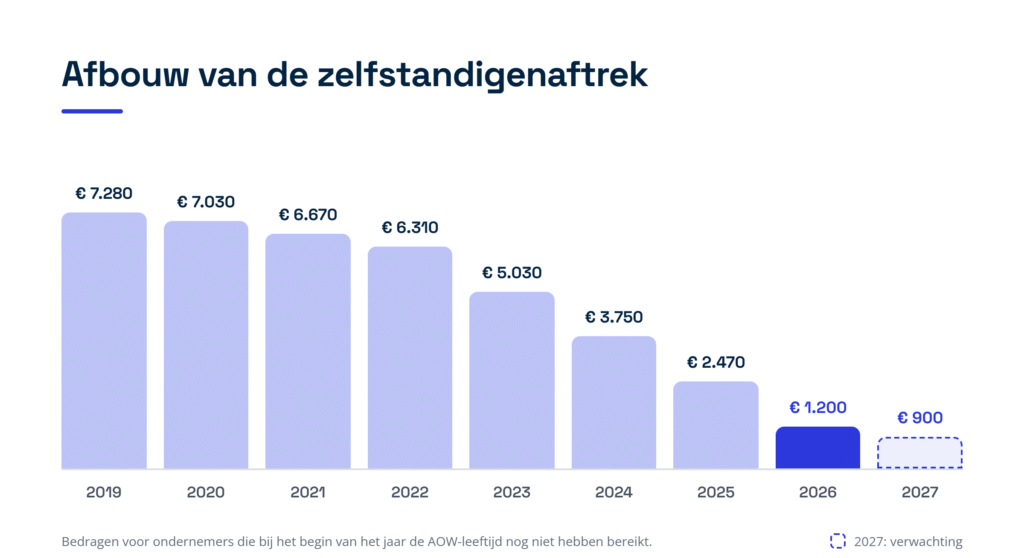


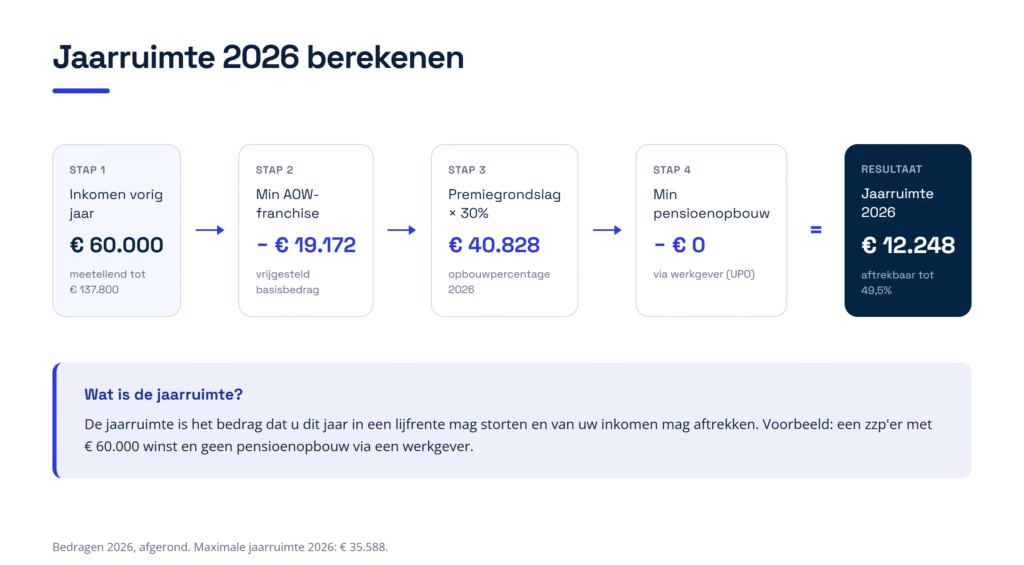 Figuur 1: Van inkomen naar jaarruimte 2026 in vier stappen. Bij 60.000 euro inkomen en geen pensioenopbouw via een werkgever blijft 12.248 euro aftrekbare ruimte over.


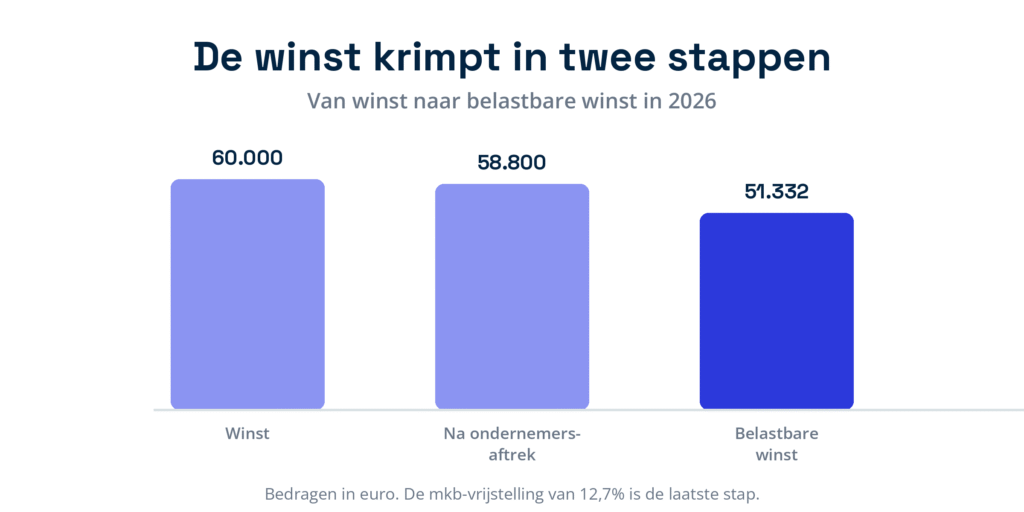
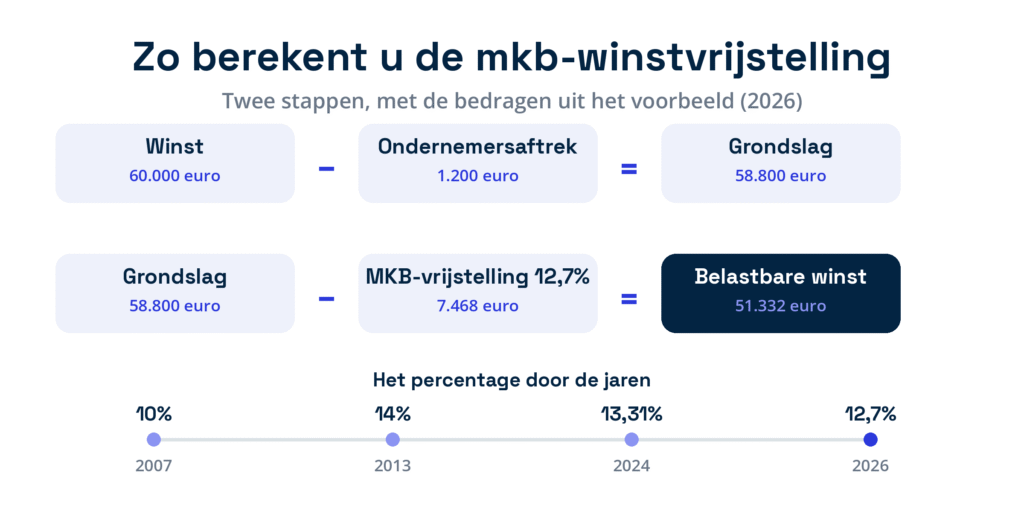 Figuur 1: de mkb-winstvrijstelling wordt in twee stappen berekend, na de ondernemersaftrek. Het percentage is de laatste jaren stap voor stap verlaagd tot 12,7% in 2026.