



See English below/Zie Engelse versie beneden
Haalt u een werknemer met schaarse kennis uit het buitenland naar Nederland, dan lopen de kosten al snel op. De 30%-regeling, sinds 2024 officieel de expatregeling genoemd, biedt uitkomst. U mag dan een deel van het loon onbelast uitbetalen als vergoeding voor de extra kosten van tijdelijk verblijf in een ander land. Voor 2026 gaat het om maximaal 30% van het loon, belastingvrij. In dit artikel leest u voor wie de regeling geldt, welke voorwaarden de Belastingdienst stelt, hoeveel u onbelast mag vergoeden en wat er vanaf 2027 verandert. Zo weet u of u de regeling kunt inzetten en wat u daarvoor moet regelen.
Wat is de 30%-regeling?
Wie tijdelijk buiten zijn eigen land werkt, maakt extra kosten. Denk aan dubbele huisvesting, hogere kosten van levensonderhoud en reizen naar het thuisland. Deze extra kosten heten extraterritoriale kosten: extra kosten van tijdelijk verblijf buiten het land van herkomst. Als werkgever mag u deze kosten onbelast vergoeden, en daarvoor bestaan twee routes.
Bij de eerste route vergoedt u de werkelijke extra kosten en bewijst u die met bonnen en bewijsstukken. Bij de tweede route past u een vast percentage toe zonder die bewijslast. Die tweede route is de bekende 30%-regeling: u betaalt een vast deel van het loon onbelast uit, zonder de werkelijke kosten aan te tonen. In vakjargon heet dit een bewijsregel. Voor veel werkgevers is de forfaitaire route eenvoudiger, omdat u geen kostenadministratie per werknemer hoeft bij te houden.
Voor wie geldt de expatregeling?
De regeling geldt voor elke werkgever die loonbelasting inhoudt en te maken heeft met grensoverschrijdend personeel, van de eenmanszaak met personeel tot de bv, nv, stichting en overheid. Er zijn twee groepen werknemers die in beeld komen.
Ingekomen werknemers
Dit zijn werknemers die u uit een ander land aanwerft of die naar Nederland worden gezonden en die een specifieke deskundigheid hebben die op de Nederlandse arbeidsmarkt schaars is. De regeling speelt vooral in kennisintensieve sectoren, zoals tech, onderzoek en ontwikkeling, financiële dienstverlening, universiteiten en onderzoeksinstellingen, ziekenhuizen en internationale bedrijven.
Uitgezonden werknemers
Dit zijn werknemers die u juist naar het buitenland stuurt, zoals ambtenaren op een post in het buitenland, militairen en werknemers die in het buitenland wetenschap beoefenen of onderwijs geven. Voor deze groep geldt de regeling gedurende de duur van de uitzending, met de eis van ten minste 45 verblijfsdagen in twaalf maanden.
Welke voorwaarden gelden er?
De Belastingdienst stelt een aantal harde eisen voordat u de 30%-regeling mag toepassen op een ingekomen werknemer. De belangrijkste zijn de salarisnorm, de afstandseis en een tijdige aanvraag. Figuur 1 laat stap voor stap zien of uw werknemer in aanmerking komt.
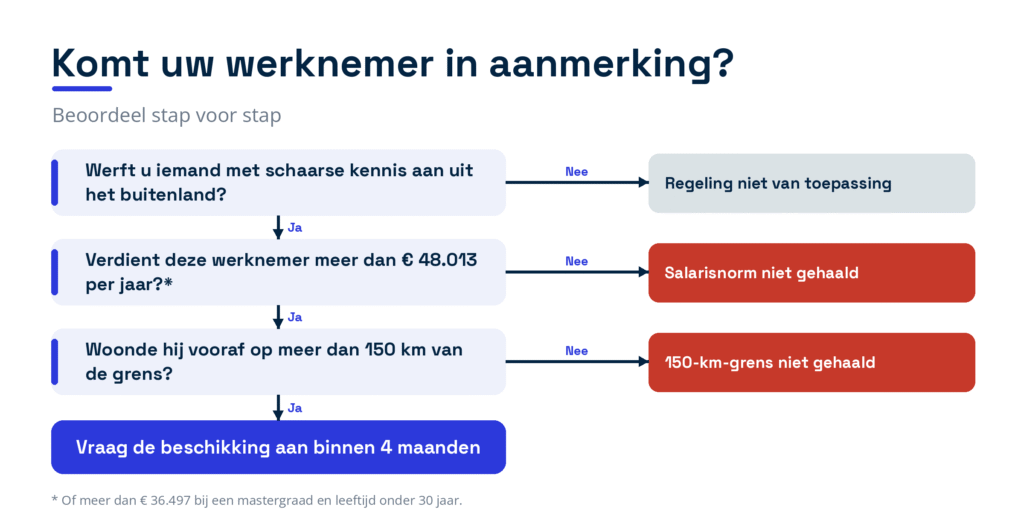
Figuur 1: beslisboom om te bepalen of uw werknemer in aanmerking komt voor de 30%-regeling.
De salarisnorm houdt in dat de werknemer een bepaald belastbaar jaarloon moet verdienen. Voor 2026 is dat meer dan 48.013 euro. Voor een werknemer die jonger is dan 30 jaar en een erkende wetenschappelijke mastergraad heeft, geldt een lagere norm van meer dan 36.497 euro. Wetenschappelijk onderzoekers en artsen in opleiding tot specialist worden geacht de specifieke deskundigheid te bezitten en hoeven niet aan de salarisnorm te voldoen.
Daarnaast geldt de afstandseis, ook wel de 150-kilometergrens genoemd. De werknemer moet in meer dan twee derde van de 24 maanden vóór het begin van het werk op meer dan 150 kilometer van de Nederlandse grens hebben gewoond. Zo wordt voorkomen dat mensen die vlak over de grens wonen de regeling gebruiken.
De looptijd van de regeling is voor ingekomen werknemers maximaal vijf jaar. Die periode wordt korter als de werknemer eerder in Nederland heeft gewerkt of gewoond; de Belastingdienst kijkt daarvoor tot 25 jaar terug. Verder maakt u als werkgever elk kalenderjaar opnieuw een keuze tussen het vergoeden van de werkelijke kosten en het toepassen van het forfait. Die keuze legt u vast in het eerste loontijdvak van het jaar.
Hoeveel mag u in 2026 onbelast vergoeden?
In 2024, 2025 en 2026 mag u maximaal 30% van het loon onbelast vergoeden. De grondslag is het loon uit tegenwoordige dienstbetrekking plus de vergoeding zelf. Schoolgelden voor internationale scholen mogen daarnaast apart onbelast worden vergoed.
Er geldt wel een plafond. Per werknemer telt maximaal 30% van de hoogste bezoldiging uit de Wet normering topinkomens mee, ook wel de Balkenendenorm genoemd. Voor 2026 is die norm 262.000 euro. De maximale onbelaste vergoeding komt daarmee uit op 78.600 euro per jaar. Deze norm wordt elk jaar per 1 januari aangepast en vóór 1 november van het voorafgaande jaar bekendgemaakt, zodat u de nieuwe grens op tijd in de loonadministratie kunt verwerken.
Rekenvoorbeeld: een uit het buitenland aangeworven software-engineer heeft een grondslag van 90.000 euro per jaar. U mag dan 30% van 90.000 euro, ofwel 27.000 euro per jaar, onbelast vergoeden. Dat is 2.250 euro per maand. Omdat 90.000 euro ruim onder het plafond blijft, speelt de aftopping op 78.600 euro hier geen rol. Figuur 2 werkt dit rekenvoorbeeld verder uit.
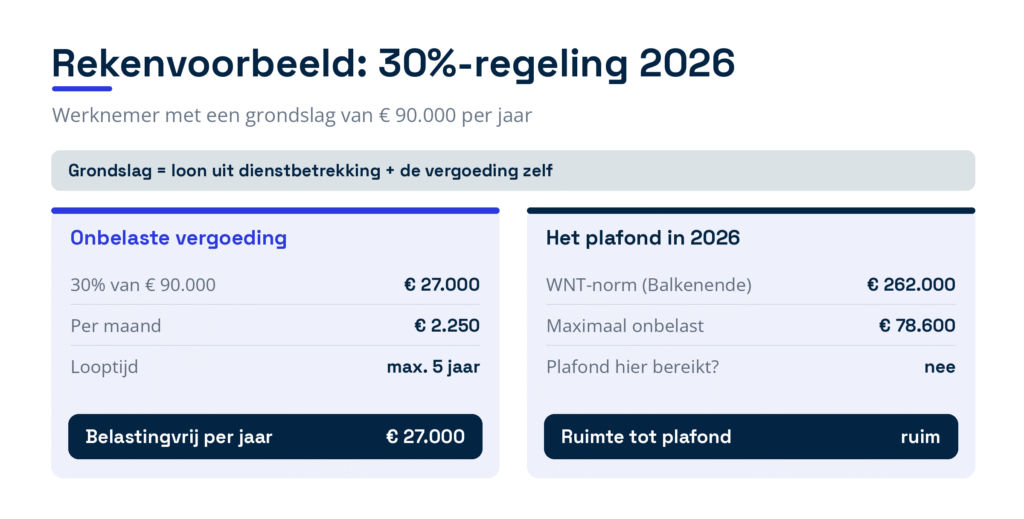
Figuur 2: rekenvoorbeeld van de onbelaste vergoeding en het plafond in 2026.
Hoe vraagt u de 30%-regeling aan?
U past de regeling niet zomaar toe. Werkgever en werknemer dienen samen een verzoek in bij de Belastingdienst, die daarop beslist met een beschikking. Tegen die beschikking is bezwaar mogelijk. Dien het verzoek in binnen vier maanden na de eerste werkdag. Doet u dat op tijd, dan werkt de regeling terug tot de start van het dienstverband. Bent u te laat, dan gaat de regeling pas later in en verliest u een deel van de looptijd.
Wisselt de werknemer binnen de looptijd van werkgever, dan loopt de regeling door zolang de onderbreking niet langer is dan drie maanden. Binnen een samenhangende groep van werkgevers wordt de vorige werkgever gelijkgesteld met de nieuwe.
Wat verandert er vanaf 2027?
Vanaf 2027 daalt het maximale onbelaste percentage van 30% naar 27%. De 30%-regeling gaat daarmee verder als 27%-regeling. Tegelijk stijgen de salarisnormen: de reguliere norm gaat naar 50.436 euro en de verlaagde norm voor jonge werknemers met een mastergraad naar 38.388 euro (beide bedragen worden jaarlijks geïndexeerd). Figuur 3 zet 2026 en 2027 naast elkaar.
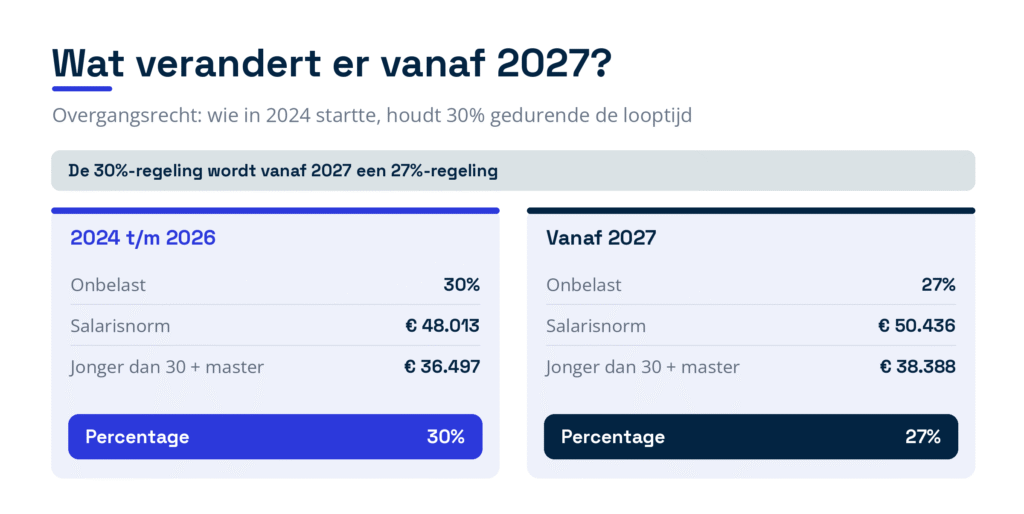
Figuur 3: vergelijking van het percentage en de salarisnormen in 2026 en vanaf 2027.
Er geldt overgangsrecht. Werknemers die de regeling voor het eerst in 2024 gebruikten, mogen gedurende de resterende looptijd het percentage van 30% en de voor hen geldende salarisnorm blijven toepassen. Voor werknemers die later instromen gelden de nieuwe percentages en normen. Laat daarom per werknemer nagaan welk regime van toepassing is.
Praktische checklist: wat u moet regelen
- Toets de doelgroep: ga na of het gaat om een uit het buitenland aangeworven werknemer met schaarse kennis, of om een werknemer die u naar het buitenland uitzendt.
- Controleer de salarisnorm: toets of het jaarloon boven 48.013 euro uitkomt, of boven 36.497 euro bij een werknemer jonger dan 30 jaar met een mastergraad.
- Check de afstandseis: zoek uit of de werknemer in de 24 maanden vóór de baan op meer dan 150 kilometer van de grens woonde.
- Vraag de beschikking op tijd aan: dien het gezamenlijke verzoek binnen vier maanden na de eerste werkdag in om terugwerkende kracht te behouden.
- Bewaak de looptijd en het plafond: houd de resterende looptijd (maximaal vijf jaar) en de aftopping op 78.600 euro per jaar bij in de loonadministratie.
- Kies jaarlijks bewust: leg elk jaar in het eerste loontijdvak vast of u het forfait toepast of de werkelijke kosten vergoedt.
Veelgestelde vragen
Blijft de 30%-regeling in 2026 gewoon 30%?
Ja. In 2024, 2025 en 2026 mag u maximaal 30% van het loon onbelast vergoeden. Pas vanaf 2027 daalt dit naar 27%.
Hoeveel mag ik maximaal onbelast vergoeden?
U mag 30% van de grondslag onbelast vergoeden. Wel geldt een plafond: per werknemer telt maximaal 30% van de Balkenendenorm mee. Voor 2026 is dat 262.000 euro, wat neerkomt op maximaal 78.600 euro onbelast per jaar.
Hoe lang loopt de regeling?
Voor ingekomen werknemers is de looptijd maximaal vijf jaar. Eerder werken of wonen in Nederland kan die periode verkorten. Voor uitgezonden werknemers geldt de duur van de uitzending.
Wat gebeurt er als ik de aanvraag te laat indien?
Dient u het verzoek later dan vier maanden na de eerste werkdag in, dan werkt de regeling niet terug tot de startdatum en verliest u een deel van de looptijd. Op tijd aanvragen levert dus direct voordeel op.
Kan ik de regeling combineren met een vergoeding van werkelijke kosten?
Niet tegelijk voor dezelfde werknemer in hetzelfde jaar. U kiest per kalenderjaar tussen het forfait van 30% en het vergoeden van de werkelijke extraterritoriale kosten.
Hoe Taxcount u kan helpen
De 30%-regeling levert een fors voordeel op, maar de voorwaarden zijn precies en de bedragen veranderen jaarlijks. Taxcount beoordeelt of uw werknemer aan de eisen voldoet, verzorgt de aanvraag van de beschikking en bewaakt de looptijd, de salarisnorm en het plafond in uw loonadministratie. Ook adviseren wij over de overgang naar het lagere percentage vanaf 2027 en over de samenloop met andere regelingen. Wilt u weten of u de 30%-regeling voor een medewerker kunt inzetten? Leg uw situatie aan ons voor, dan rekenen wij het voor u door. In de tussentijd kan u gebruik maken van onze Expatregeling monitor.
Dit artikel bevat algemene informatie en is geen fiscaal advies. Tarieven, bedragen en drempels kunnen wijzigen, en de uitkomst hangt af van uw persoonlijke situatie. Laat uw situatie altijd door een adviseur beoordelen voordat u beslissingen neemt.
English version
When you bring an employee with scarce expertise to the Netherlands from abroad, the costs add up quickly. The 30% ruling, officially called the expat scheme since 2024, offers relief. It allows you to pay part of the salary tax-free as compensation for the extra costs of a temporary stay in another country. For 2026 this means up to 30% of the salary, free of tax. This article explains who the scheme applies to, which conditions the Tax Administration sets, how much you may reimburse tax-free and what changes from 2027 onwards. That way you know whether you can use the scheme and what you need to arrange.
What is the 30% ruling?
Someone who works temporarily outside their own country incurs extra costs, such as double housing, higher living expenses and travel to their home country. These extra costs are called extraterritorial costs: additional costs of a temporary stay outside the country of origin. As an employer you may reimburse these costs tax-free, and there are two routes for this.
Under the first route you reimburse the actual extra costs and prove them with receipts and supporting documents. Under the second route you apply a fixed percentage without that burden of proof. This second route is the well-known 30% ruling: you pay a fixed part of the salary tax-free without demonstrating the actual costs. In technical terms this is called an evidence rule. For many employers the fixed-percentage route is simpler, because you do not have to keep a cost record for each employee.
Who does the expat scheme apply to?
The scheme applies to any employer that withholds payroll tax and deals with cross-border staff, from the sole trader with employees to the private limited company, public limited company, foundation and government. Two groups of employees come into play.
Incoming employees
These are employees whom you recruit from another country or who are sent to the Netherlands and who have a specific expertise that is scarce on the Dutch labour market. The scheme is especially relevant in knowledge-intensive sectors, such as technology, research and development, financial services, universities and research institutes, hospitals and international companies.
Outgoing employees
These are employees whom you send abroad, such as civil servants at a post abroad, military personnel and employees who carry out scientific work or teach abroad. For this group the scheme applies for the duration of the posting, subject to the requirement of at least 45 days of stay within twelve months.
Which conditions apply?
The Tax Administration sets a number of strict conditions before you may apply the 30% ruling to an incoming employee. The most important are the salary standard, the distance requirement and a timely application. Figure 1 shows step by step whether your employee qualifies.
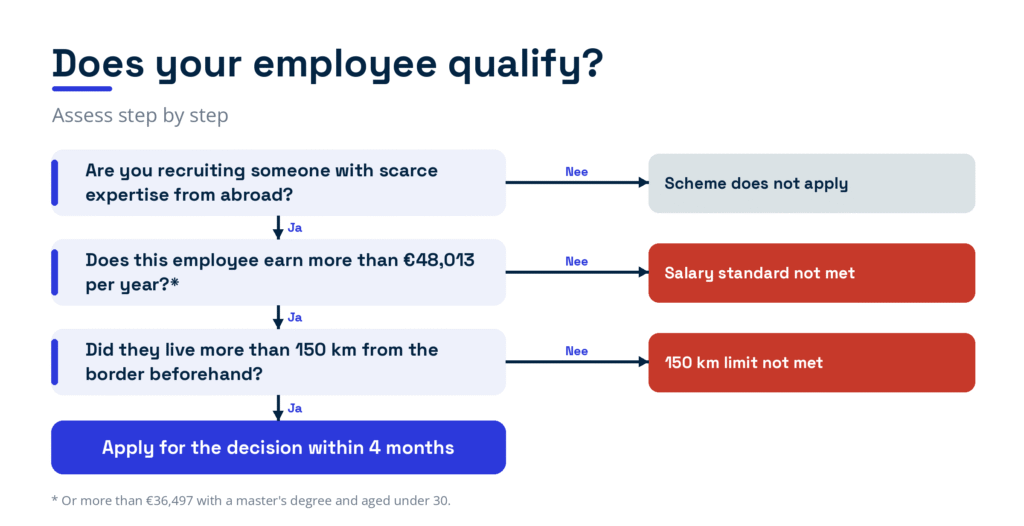
Figure 1: decision tree to determine whether your employee qualifies for the 30% ruling.
The salary standard means that the employee must earn a certain taxable annual salary. For 2026 that is more than 48,013 euros. For an employee under the age of 30 who holds a recognised academic master’s degree, a lower standard of more than 36,497 euros applies. Academic researchers and doctors in specialist training are deemed to possess the specific expertise and do not have to meet the salary standard.
In addition, the distance requirement applies, also known as the 150-kilometre limit. The employee must have lived more than 150 kilometres from the Dutch border during more than two thirds of the 24 months before the start of the work. This prevents people who live just across the border from using the scheme.
The duration of the scheme for incoming employees is a maximum of five years. That period is shortened if the employee has previously worked or lived in the Netherlands; the Tax Administration looks back up to 25 years for this. Furthermore, as an employer you make a fresh choice each calendar year between reimbursing the actual costs and applying the fixed percentage. You record that choice in the first payroll period of the year.
How much may you reimburse tax-free in 2026?
In 2024, 2025 and 2026 you may reimburse up to 30% of the salary tax-free. The basis is the salary from current employment plus the allowance itself. School fees for international schools may be reimbursed tax-free separately, on top of this.
There is a ceiling, however. Per employee, no more than 30% of the highest remuneration under the Standards for Remuneration Act (the so-called Balkenende standard) is taken into account. For 2026 that standard is 262,000 euros. The maximum tax-free allowance therefore comes to 78,600 euros per year. This standard is adjusted every year on 1 January and announced before 1 November of the preceding year, so that you can process the new limit in your payroll administration in good time.
Example: a software engineer recruited from abroad has a basis of 90,000 euros per year. You may then reimburse 30% of 90,000 euros, that is 27,000 euros per year, tax-free. That amounts to 2,250 euros per month. Because 90,000 euros is well below the ceiling, the cap of 78,600 euros plays no role here. Figure 2 works out this example in more detail.
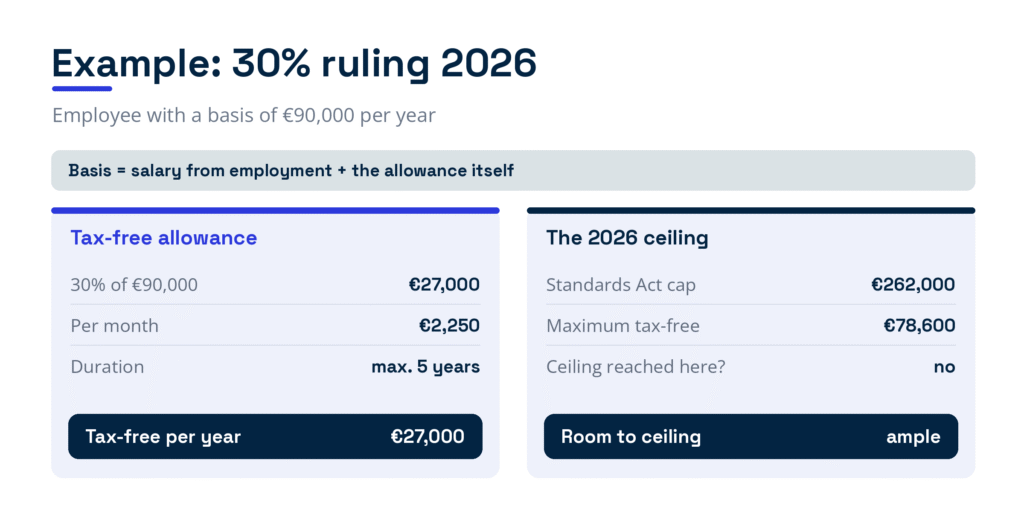
Figure 2: example of the tax-free allowance and the ceiling in 2026.
How do you apply for the 30% ruling?
You do not simply apply the scheme. The employer and employee submit a joint request to the Tax Administration, which then decides by means of a formal decision. An objection against that decision is possible. Submit the request within four months of the first working day. If you do so on time, the scheme takes effect retroactively from the start of the employment. If you are late, the scheme starts only later and you lose part of the duration.
If the employee changes employer within the duration, the scheme continues as long as the interruption is no longer than three months. Within a related group of employers, the previous employer is treated as the new one.
What changes from 2027 onwards?
From 2027 the maximum tax-free percentage falls from 30% to 27%. The 30% ruling then continues as a 27% ruling. At the same time the salary standards rise: the regular standard goes to 50,436 euros and the reduced standard for young employees with a master’s degree to 38,388 euros (both amounts are indexed annually). Figure 3 places 2026 and 2027 side by side.

Figure 3: comparison of the percentage and the salary standards in 2026 and from 2027.
Transitional rules apply. Employees who first used the scheme in 2024 may continue to apply the 30% percentage and the salary standard applicable to them for the remaining duration. New entrants are subject to the new percentages and standards. Therefore have it checked per employee which regime applies.
Practical checklist: what you need to arrange
- Check the target group: determine whether it concerns an employee recruited from abroad with scarce knowledge, or an employee you are sending abroad.
- Verify the salary standard: check whether the annual salary exceeds 48,013 euros, or 36,497 euros for an employee under 30 with a master’s degree.
- Confirm the distance requirement: find out whether the employee lived more than 150 kilometres from the border during the 24 months before the job.
- Apply for the decision on time: submit the joint request within four months of the first working day to retain retroactive effect.
- Monitor the duration and the ceiling: keep track of the remaining duration (a maximum of five years) and the cap of 78,600 euros per year in your payroll administration.
- Choose deliberately each year: record in the first payroll period of each year whether you apply the fixed percentage or reimburse the actual costs.
Frequently asked questions
Does the 30% ruling remain 30% in 2026?
Yes. In 2024, 2025 and 2026 you may reimburse up to 30% of the salary tax-free. Only from 2027 does this fall to 27%.
How much may I reimburse tax-free at most?
You may reimburse 30% of the basis tax-free. There is a ceiling, however: per employee, no more than 30% of the Balkenende standard is taken into account. For 2026 that is 262,000 euros, which amounts to a maximum of 78,600 euros tax-free per year.
How long does the scheme last?
For incoming employees the duration is a maximum of five years. Previous work or residence in the Netherlands can shorten that period. For outgoing employees the duration of the posting applies.
What happens if I submit the application late?
If you submit the request later than four months after the first working day, the scheme does not take effect retroactively from the start date and you lose part of the duration. Applying on time therefore yields an immediate advantage.
Can I combine the scheme with a reimbursement of actual costs?
Not at the same time for the same employee in the same year. You choose per calendar year between the fixed percentage of 30% and reimbursing the actual extraterritorial costs.
How Taxcount can help you
The 30% ruling delivers a considerable advantage, but the conditions are precise and the amounts change every year. Taxcount assesses whether your employee meets the requirements, arranges the application for the decision and monitors the duration, the salary standard and the ceiling in your payroll administration. We also advise on the transition to the lower percentage from 2027 and on the interaction with other schemes. Would you like to know whether you can use the 30% ruling for an employee? Present your situation to us and we will calculate it for you. In the mean time you can use our Expatruling monitor.
This article contains general information and is not tax advice. Rates, amounts and thresholds may change, and the outcome depends on your personal situation. Always have your situation assessed by an adviser before making decisions.


 Figuur 1: een fiscale eenheid van een holding (moeder) met twee werk-bv’s (dochters).
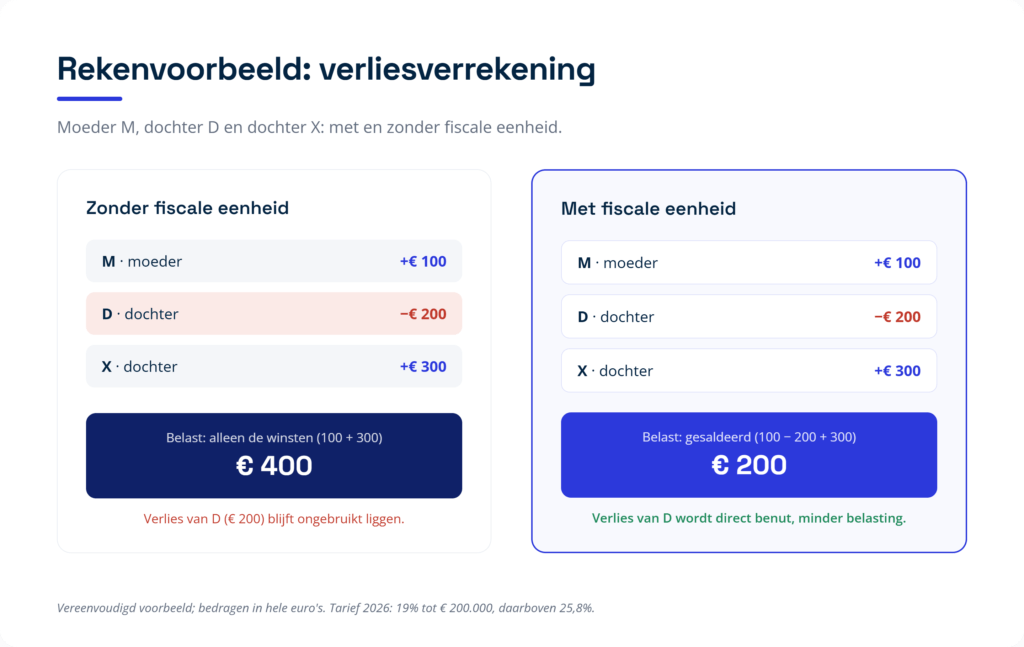 Figuur 2: verliesverrekening met en zonder fiscale eenheid, bij winst 100, verlies 200 en winst 300.