



See English below/Zie Engelse versie beneden
Je woont in Nederland en ontvangt pensioen van een internationale organisatie, bijvoorbeeld de Verenigde Naties, de NAVO, de ruimtevaartorganisatie ESA of het Europees Octrooibureau. Geef je dat pensioen volledig op als inkomen in box 1? Dan betaal je waarschijnlijk te veel belasting. Een deel van je pensioen is namelijk opgebouwd uit je eigen premies, waarover je destijds al belasting betaalde. Dat deel hoort niet in box 1, maar in box 3. Dit splitsen heet de splitsingsmethode. In dit artikel lees je hoe het werkt, voor welke organisaties het geldt en wat je moet regelen om deze besparing veilig te benutten.
Waarom is je pensioen belast en je salaris niet was?
Werknemers van internationale organisaties betalen over hun salaris meestal geen Nederlandse belasting. De organisatie houdt vaak zelf een interne heffing in. Voor het pensioen ligt dat anders: dat mag Nederland volgens de gewone regels belasten. De hoofdregel is daarom dat je pensioenuitkering volledig meetelt als loon in box 1.
Op die hoofdregel bestaat een belangrijke uitzondering. Voor zover je aannemelijk maakt dat over de opbouw van je pensioen destijds al een belasting naar het inkomen is geheven, hoeft dat deel niet nogmaals in box 1. Bij deze regelingen betaalde je je eigen premie uit je netto-inkomen, dus die was niet aftrekbaar. Dat deel is dus al belast geweest en verhuist naar box 3, waar de waarde van dat pensioenrecht als bezitting meetelt.
Wat is de splitsingsmethode?
De splitsingsmethode verdeelt een pensioenuitkering over twee boxen. Het deel dat is opgebouwd met werkgeverspremies blijft belast in box 1 (als loon). Het deel dat je zelf uit je netto-inkomen betaalde, valt in box 3 (als vermogen). Omdat box 3 vaak veel lager wordt belast dan het progressieve tarief in box 1, kan dit duizenden euro per jaar schelen.
Voor het Europees Octrooibureau en de zogeheten Gecoordineerde Pensioenregeling (onder meer NAVO, ESA, OESO, de Raad van Europa, ECMWF en EUMETSAT) heeft de staatssecretaris een praktische goedkeuring gegeven. Je hoeft dan niet je premiegegevens over tientallen jaren te bewijzen. In plaats daarvan geldt een vast forfait: twee derde van de jaarlijkse uitkering geef je aan in box 1, en een derde valt buiten box 1. De waarde van dat een derde geef je aan in box 3. Toeslagen (allowances) en de tax adjustment horen wel volledig in box 1 (zie figuur 1).
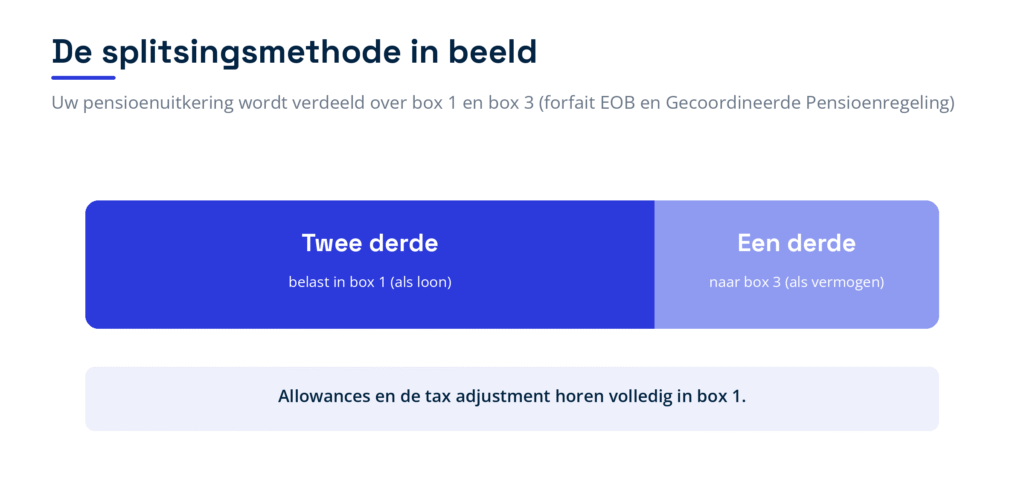
Figuur 1: bij het forfait blijft twee derde van de uitkering in box 1 en verhuist een derde naar box 3; allowances en de tax adjustment horen volledig in box 1.
Een rekenvoorbeeld
Een alleenstaande gepensioneerde van 71 jaar ontvangt 21.000 euro pensioen uit de Gecoordineerde Pensioenregeling en daarnaast 500 euro tax adjustment. In box 1 geeft hij twee derde van 21.000 euro (14.000 euro) plus de 500 euro tax adjustment aan, samen 14.500 euro. Het overige een derde (7.000 euro) valt buiten box 1. De waarde daarvan in box 3 berekent hij door 7.000 euro te vermenigvuldigen met de leeftijdsfactor uit de wet, die bij 71 jaar 8 bedraagt: 8 maal 7.000 euro is 56.000 euro. Zo geeft hij jaarlijks 7.000 euro minder aan in het progressief belaste box 1, tegenover een box 3-bezitting van 56.000 euro (zie figuur 2).
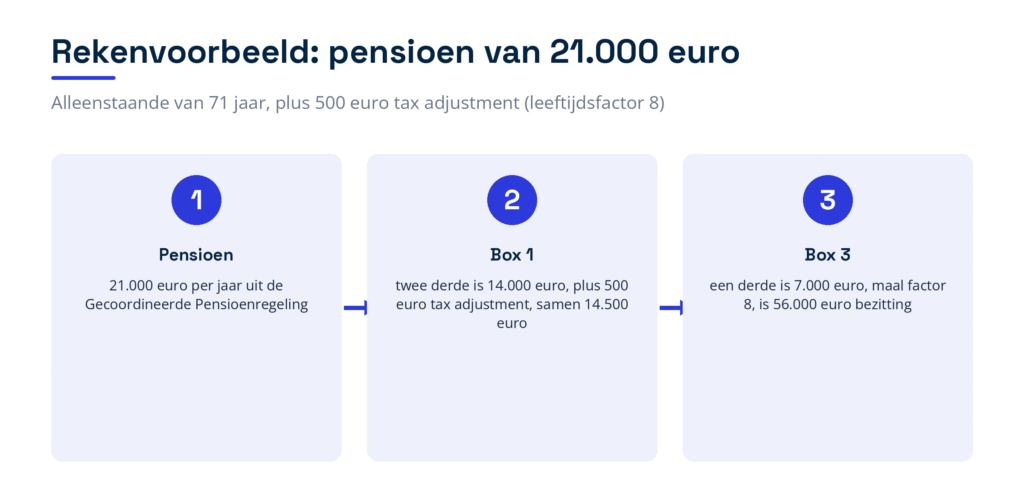
Figuur 2: uitwerking van het rekenvoorbeeld. Van de uitkering van 21.000 euro blijft 14.500 euro in box 1; 7.000 euro wordt met factor 8 een box 3-bezitting van 56.000 euro.
Let op: voor het VN-pensioenfonds UNJSPF ligt dezelfde verhouding vast in het pensioenreglement. De werknemer draagt de helft van wat de werkgever betaalt; de eigen bijdrage is dus ook hier een derde van de totale premie, in alle opbouwjaren. Het beleidsbesluit geldt formeel alleen voor het EOB en de Gecoordineerde Pensioenregeling, dus voor een VN-pensioen is doorgaans meer onderbouwing of overleg met de Belastingdienst nodig.
Voor welke organisaties geldt dit?
De regeling geldt voor in Nederland wonende gepensioneerden en nabestaanden van internationale organisaties. In de praktijk gaat het onder meer om de Verenigde Naties (met het pensioenfonds UNJSPF), het Europees Octrooibureau en de Gecoordineerde Pensioenregeling van NAVO, ESA, OESO, de Raad van Europa, ECMWF en EUMETSAT. Ook pensioenen van bijvoorbeeld het IMF, de Wereldbank, UNESCO, UNICEF, de WHO en de WTO kunnen eronder vallen.
Belangrijke uitzondering: pensioenen van de Europese Unie en de Europese Centrale Bank zijn vrijgesteld van Nederlandse belasting. Voor die pensioenen speelt de splitsingsmethode dus niet (zie figuur 3).
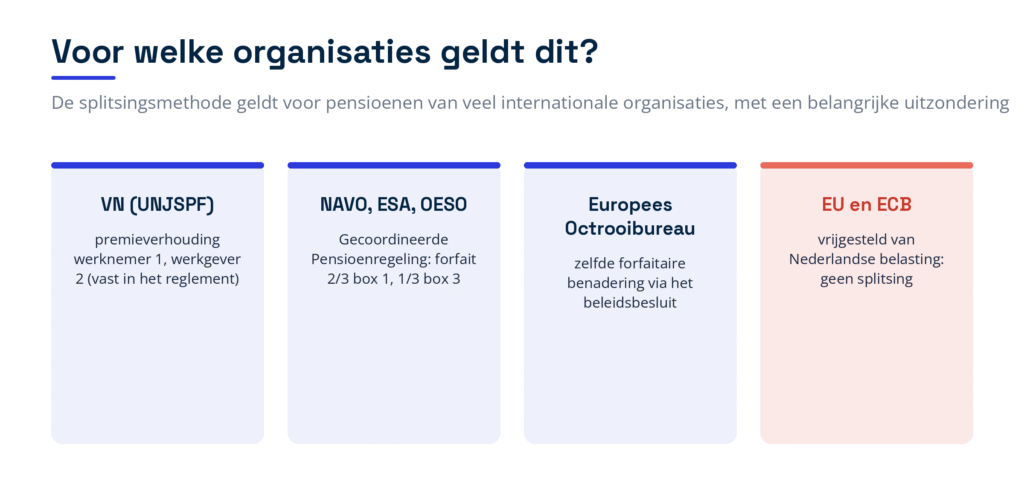
Figuur 3: de splitsingsmethode geldt voor pensioenen van veel internationale organisaties, maar niet voor de EU en de ECB (die zijn vrijgesteld).
Wanneer geldt de splitsing juist niet?
De splitsingsmethode geldt alleen voor een ouderdoms- of nabestaandenpensioen. Een invaliditeitspensioen (uitkering bij arbeidsongeschiktheid) is fiscaal een risicoverzekering zonder opbouw en is daarom volledig belast in box 1. Ook de bijbehorende toeslagen en de tax adjustment volgen het regime van de hoofduitkering en vallen dus in box 1.
Verder is er een aandachtspunt bij oude opbouwjaren. Tot en met belastingjaar 2024 was een deel van de vroegste opbouw (van voor 1995) in bepaalde internationale situaties nog onbelast. Vanaf 1 januari 2025 is die vrijstelling vervallen. De precieze gevolgen van deze wetswijziging zijn nog niet volledig uitgekristalliseerd, dus over oudere jaren is maatwerk nodig.
Waarop moet je letten?
Het grootste risico is niet een naheffing, maar dat je voordeel laat liggen door je pensioen volledig in box 1 op te geven. Wie de splitsing wel toepast, moet het box 3-deel daadwerkelijk als bezitting aangeven en dit ieder jaar opnieuw berekenen met de leeftijdsfactor. Wijk je af van het forfait, dan moet je het premieverloop over de hele opbouwperiode kunnen onderbouwen. En je moet kiezen: de forfaitaire benadering en de oudere saldomethode mogen niet worden gecombineerd. Zonder tijdig en verifieerbaar bewijs wordt de uitkering alsnog volledig in box 1 belast, zo blijkt uit de rechtspraak.
Praktische checklist: wat je moet regelen
- Bepaal de herkomst van je pensioen. Ga na van welke organisatie je pensioen komt en of het een ouderdoms- of nabestaandenpensioen is (en dus geen invaliditeitspensioen).
- Sluit EU en ECB uit. Komt je pensioen van de Europese Unie of de Europese Centrale Bank, dan is het vrijgesteld en speelt de splitsing niet.
- Vraag premieoverzichten op. Vraag bij de pensioenuitvoerder de jaaropgaven en, bij de VN, je Annual Pension Statement op. Zonder bewijs blijft alles in box 1.
- Geef het box 3-deel aan. Reken de waarde van het niet-belaste deel jaarlijks om met de leeftijdsfactor en neem die als bezitting op in box 3.
- Kies bewust tussen forfait en saldomethode. De twee faciliteiten kun je niet combineren; laat doorrekenen welke voor jou het gunstigst is.
- Controleer openstaande aanslagen. Staan er nog aanslagen open over eerdere jaren, dan kunnen die soms alsnog worden hersteld.
Veelgestelde vragen
Moet ik belasting betalen over mijn VN- of NAVO-pensioen in Nederland?
Ja. Anders dan het salaris tijdens je dienstverband mag Nederland je pensioen belasten. Met de splitsingsmethode betaal je alleen over het werkgeversdeel in box 1; het deel dat je zelf uit je netto-inkomen opbouwde, valt in box 3.
Hoeveel van mijn pensioen valt in box 3?
Bij het Europees Octrooibureau en de Gecoordineerde Pensioenregeling geldt een forfait van een derde in box 3 en twee derde in box 1. De waarde van dat een derde bereken je met een leeftijdsafhankelijke factor uit de wet.
Geldt de regeling ook voor een pensioen van de EU?
Nee. Pensioenen van de Europese Unie en de Europese Centrale Bank zijn volledig vrijgesteld van Nederlandse belasting. De splitsingsmethode is daar niet aan de orde.
Wat als ik een invaliditeitspensioen ontvang?
Een invaliditeitspensioen is volledig belast in box 1. Er vindt geen splitsing plaats, omdat er geen sprake is van opbouw met eigen premies.
Kan ik te veel betaalde belasting van eerdere jaren terugkrijgen?
Dat kan soms. Voor jaren waarvan de aanslag nog niet definitief vaststaat, kan de splitsing alsnog worden toegepast. Laat je aanslagen en aangiften daarom nakijken.
Hoe Taxcount je kan helpen
Het pensioen van een internationale organisatie is fiscaal specialistisch werk: de juiste box, het forfait of het werkelijke premieverloop, de leeftijdsfactor voor box 3 en de keuze tussen faciliteiten luisteren nauw. Een fout kost je ofwel jaarlijks onnodig belastinggeld, ofwel een langlopende discussie met de Belastingdienst. Taxcount beoordeelt van welke regeling je pensioen komt, past de splitsingsmethode correct toe, verzorgt zo nodig het overleg met de inspecteur en controleert of oude jaren nog te herstellen zijn. Ontvang je pensioen van de VN, NAVO, ESA, het EOB of een vergelijkbare organisatie? Laat je aangifte door Taxcount toetsen en betaal niet meer belasting dan nodig.
Dit artikel bevat algemene informatie en is geen fiscaal advies. Tarieven, drempels en voorwaarden kunnen wijzigen en de uitkomst hangt af van je persoonlijke situatie. Laat je daarom altijd persoonlijk adviseren voordat je fiscale beslissingen neemt.
English version
You live in the Netherlands and receive a pension from an international organisation, for example the United Nations, NATO, the space agency ESA or the European Patent Office. Do you report that pension in full as income in box 1? Then you are probably paying too much tax. Part of your pension was built up from your own contributions, on which you already paid tax at the time. That part does not belong in box 1, but in box 3. Dividing the pension in this way is called the split method. This article explains how it works, which organisations it applies to and what you need to arrange to secure this saving safely.
Why is your pension taxed while your salary was not?
Employees of international organisations usually pay no Dutch tax on their salary. The organisation often applies its own internal levy. Pensions are treated differently: the Netherlands may tax them under the ordinary rules. The main rule is therefore that your pension payment counts in full as salary in box 1.
There is an important exception to this main rule. To the extent that you can make it plausible that tax on income was already levied on the build-up of your pension, that part does not have to be taxed again in box 1. Under these schemes you paid your own contribution out of your net income, so it was not deductible. That part has therefore already been taxed and moves to box 3, where the value of the pension right counts as an asset.
What is the split method?
The split method divides a pension payment across two boxes. The part built up with employer contributions remains taxed in box 1 (as salary). The part you paid yourself out of your net income falls in box 3 (as wealth). Because box 3 is often taxed much more lightly than the progressive rate in box 1, this can save thousands of euro per year.
For the European Patent Office and the so-called Co-ordinated Pension Scheme (including NATO, ESA, the OECD, the Council of Europe, ECMWF and EUMETSAT) the State Secretary has issued a practical approval. You then do not have to prove your contribution history going back decades. Instead a fixed ratio applies: you report two thirds of the annual payment in box 1, and one third falls outside box 1. You report the value of that one third in box 3. Allowances and the tax adjustment do belong entirely in box 1 (see figure 1).
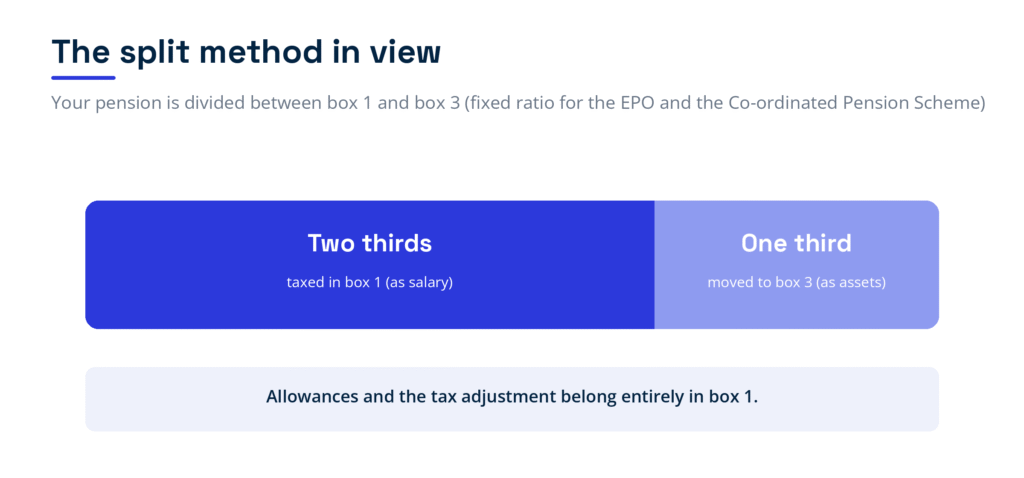
Figure 1: under the fixed ratio two thirds of the payment stays in box 1 and one third moves to box 3; allowances and the tax adjustment belong entirely in box 1.
A worked example
A single pensioner aged 71 receives 21,000 euro of pension from the Co-ordinated Pension Scheme, plus 500 euro of tax adjustment. In box 1 he reports two thirds of 21,000 euro (14,000 euro) plus the 500 euro tax adjustment, being 14,500 euro in total. The remaining one third (7,000 euro) falls outside box 1. He calculates its box 3 value by multiplying 7,000 euro by the statutory age factor, which is 8 at the age of 71: 8 times 7,000 euro is 56,000 euro. In this way he reports 7,000 euro less each year in progressively taxed box 1, against a box 3 asset of 56,000 euro (see figure 2).

Figure 2: the worked example. Of the 21,000 euro payment, 14,500 euro stays in box 1; 7,000 euro becomes a box 3 asset of 56,000 euro using factor 8.
Which organisations does this apply to?
The scheme applies to pensioners and surviving dependants living in the Netherlands who worked for international organisations. In practice this includes the United Nations (with the UNJSPF pension fund), the European Patent Office and the Co-ordinated Pension Scheme of NATO, ESA, the OECD, the Council of Europe, ECMWF and EUMETSAT. Pensions from, for example, the IMF, the World Bank, UNESCO, UNICEF, the WHO and the WTO may also fall under it.
Important exception: pensions from the European Union and the European Central Bank are exempt from Dutch tax. The split method therefore does not apply to those pensions (see figure 3).
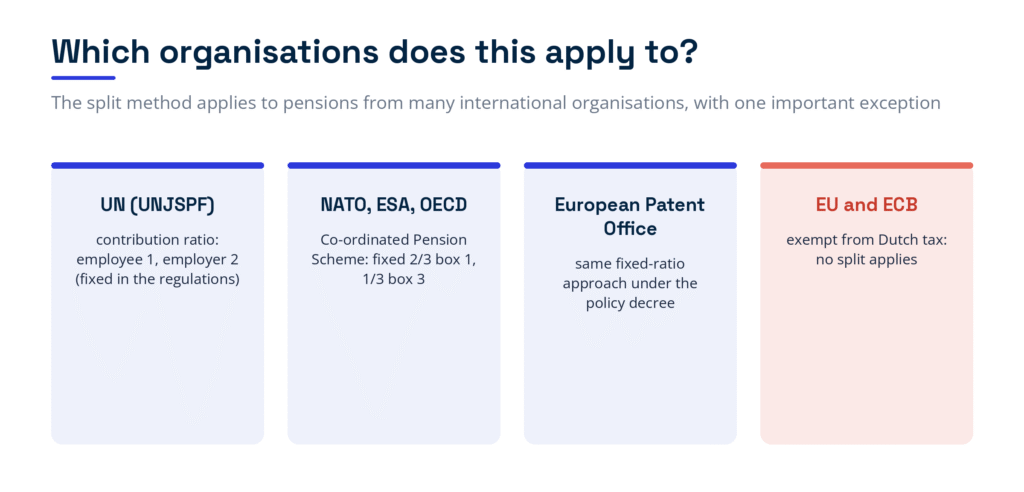
Figure 3: the split method applies to pensions from many international organisations, but not to the EU and the ECB (which are exempt).
When does the split not apply?
The split method applies only to an old-age or survivor pension. A disability pension (a payment on incapacity for work) is, for tax purposes, an insurance without build-up and is therefore taxed in full in box 1. The related allowances and the tax adjustment follow the treatment of the main payment and so also fall in box 1.
There is a further point of attention for older build-up years. Up to and including tax year 2024, part of the earliest build-up (from before 1995) was still untaxed in certain international situations. From 1 January 2025 that exemption has lapsed. The precise consequences of this change in the law are not yet fully settled, so older years call for a tailored assessment.
What should you watch out for?
The biggest risk is not an additional assessment, but leaving money on the table by reporting your pension in full in box 1. Anyone who does apply the split must actually report the box 3 part as an asset and recalculate it each year using the age factor. If you depart from the fixed ratio, you must be able to substantiate the contribution history for the whole build-up period. And you have to choose: the fixed-ratio approach and the older balance method may not be combined. Without timely and verifiable evidence the payment is taxed in full in box 1 after all, as the case law shows.
Practical checklist: what to arrange
- Determine the origin of your pension. Establish which organisation your pension comes from and whether it is an old-age or survivor pension (and therefore not a disability pension).
- Rule out the EU and the ECB. If your pension comes from the European Union or the European Central Bank, it is exempt and the split does not apply.
- Request contribution statements. Ask the pension administrator for the annual statements and, at the UN, your Annual Pension Statement. Without evidence everything stays in box 1.
- Report the box 3 part. Convert the value of the untaxed part each year using the age factor and report it as an asset in box 3.
- Choose deliberately between fixed ratio and balance method. The two facilities cannot be combined; have it calculated which one is most favourable for you.
- Check open assessments. If assessments over earlier years are still open, they can sometimes be corrected retroactively.
Frequently asked questions
Do I have to pay Dutch tax on my UN or NATO pension?
Yes. Unlike your salary during your employment, the Netherlands may tax your pension. With the split method you pay tax only on the employer part in box 1; the part you built up yourself from your net income falls in box 3.
How much of my pension falls in box 3?
For the European Patent Office and the Co-ordinated Pension Scheme a fixed ratio of one third in box 3 and two thirds in box 1 applies. You calculate the value of that one third using a statutory age-dependent factor.
Does the scheme also apply to an EU pension?
No. Pensions from the European Union and the European Central Bank are fully exempt from Dutch tax. The split method does not come into play there.
What if I receive a disability pension?
A disability pension is taxed in full in box 1. No split takes place, because there is no build-up from your own contributions.
Can I reclaim tax overpaid in earlier years?
Sometimes you can. For years whose assessment is not yet final, the split can still be applied. It is therefore worth having your assessments and returns reviewed.
How Taxcount can help you
A pension from an international organisation is specialist tax work: the correct box, the fixed ratio or the actual contribution history, the age factor for box 3 and the choice between facilities all require precision. A mistake either costs you unnecessary tax every year, or leads to a lengthy dispute with the Tax Administration. Taxcount assesses which scheme your pension comes from, applies the split method correctly, arranges any consultation with the inspector where needed and checks whether earlier years can still be corrected. Do you receive a pension from the UN, NATO, ESA, the EPO or a comparable organisation? Have your return reviewed by Taxcount and pay no more tax than necessary.
This article contains general information and is not tax advice. Rates, thresholds and conditions may change and the outcome depends on your personal situation. Always seek personal advice before making tax decisions.